

DialogueON: Climate Justice
- Zuzanna Borowska
- Jun 1
- 2 min read


On 22nd May, ODIF hosted another inspiring session in our DialogueON series, bringing together participants from across the world to explore the urgent social issues. This month, our event focused on climate justice. In particular, we addressed the disproportionate impact of climate change on women, while also highlighting the critical role that young people play as leaders and advocates within climate movements.
Speaker Insights
We were delighted to welcome our first speaker, Cyrus K. Wea Jr. Cyrus is a youth advocate for youth empowerment and sustainable development.
Drawing from his experiences in civic engagement and advocacy work, Cyrus explored how climate justice extends far beyond environmental concerns and must also be understood as a human rights, social justice, and economic issue. Throughout his discussion, he emphasised that climate change is not gender neutral. Women and girls, particularly those in vulnerable communities, often face the harshest impacts of environmental degradation.

He highlighted how women play essential roles in food security, agriculture, peacebuilding, and community leadership, yet continue to face barriers including limited land ownership, reduced financial protection, restricted access to education, and heightened vulnerability caused by displacement and poverty.
However, Cyrus stressed that women are not simply victims of climate change but are already leading climate solutions as teachers, organisers, advocates, and community leaders. His recommendations included stronger government advocacy, gender-responsive climate policies, and increased support for women-led grassroots organisations through NGOs and international institutions.

Our second speaker, Ache William, reinforced the importance of empowering women not only by giving them opportunities, but by recognising them as the driving force behind climate
action. Ache also stressed the importance of creating opportunities for women across all sectors, including engineering, AI, agriculture, and academia.
Dialogue
For the second half of our event, participants reflected on the barriers women face when responding to climate-related crises, including limited opportunities to relocate from affected areas and unequal access to resources. Questions were raised about what practical measures governments and organisations can implement to ensure women are supported equally and meaningfully within climate resilience efforts.
Several participants emphasised the importance of education and representation. There were calls for more women and girls to attend climate justice events, gain access to higher education, and lead climate-related projects and initiatives. Others discussed how women are often central figures within households and local communities.
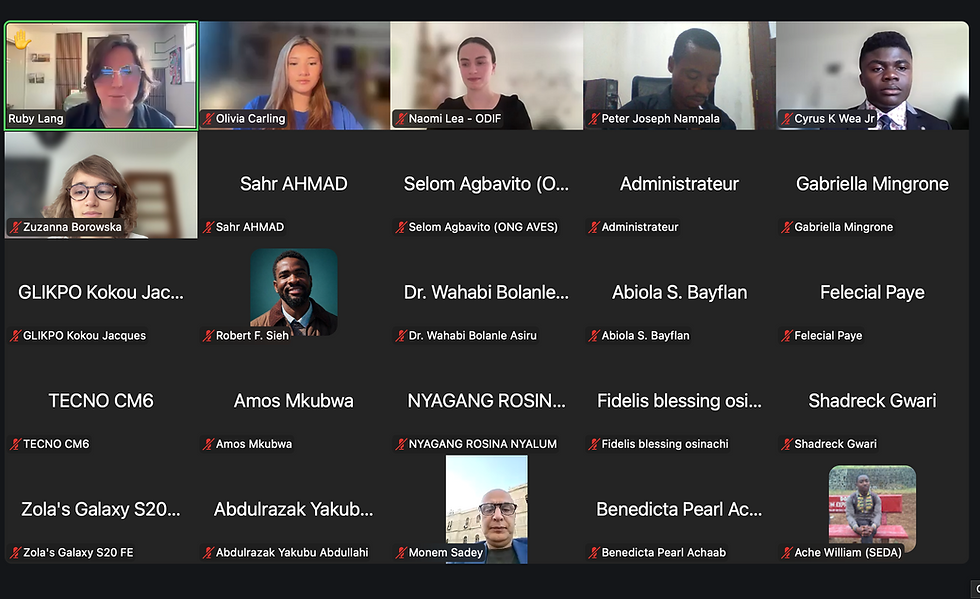
Contributions also highlighted the importance of locally led climate action. Participants stressed that climate justice cannot be achieved without amplifying community voices. One participant emphasised the need to “meet women where they are” by creating accessible pathways and recognising the structural barriers that many women face.
Final Thoughts
The session concluded by emphasising that climate justice cannot exist without gender justice. We want to extend a huge thank you to everyone who shared their perspectives during this dialogue. The conversation reminded us that climate justice is deeply interconnected with dignity, opportunity, education, and equality. By centering women, youth, and grassroots communities within climate solutions, we move closer towards a more just, inclusive, and sustainable future for all.
~Naomi Lea


Comments